
Find the exact vacuum bag your machine takes
Type your vacuum brand or model below, or pick a brand from the list.
Start typing a brand name, model name or reference code.
How to read a vacuum bag reference code
Every vacuum bag sold in the UK carries a short reference printed on its card collar, usually two or three letters followed by a number, such as GN, FJM, H30 or s-bag. That code is not a random product name. It describes the exact shape of the collar and the size of the opening that has to seat inside your machine's bag holder. Two bags can look almost identical in the box and still fail to seal properly if the reference does not match, because the difference between shapes is often a few millimetres in collar width or the position of the cardboard tab.
Manufacturers reuse the same reference across many models that share the same internal bag holder, which is why one bag code, such as Miele's GN or Electrolux's s-bag, can cover a whole generation of machines rather than a single model. The trade off is that when a manufacturer changes the shape of the holder, usually every few years, the old reference stops being sold as the current standard and a new one takes over. This is why an older machine and a newer one from the same brand can need completely different bags even though the vacuum body looks similar.
| Where the code usually sits | What to look for |
|---|---|
| Printed on the old bag's card collar | Letters plus a number, for example GN, H64, NVM-1CH |
| Printed inside the dust compartment door | A sticker naming the bag type your machine was designed for |
| In the machine's user manual | Listed under consumables or spare parts |
Where to find it on the machine
- Open the dust compartment door and check for a sticker naming the bag type.
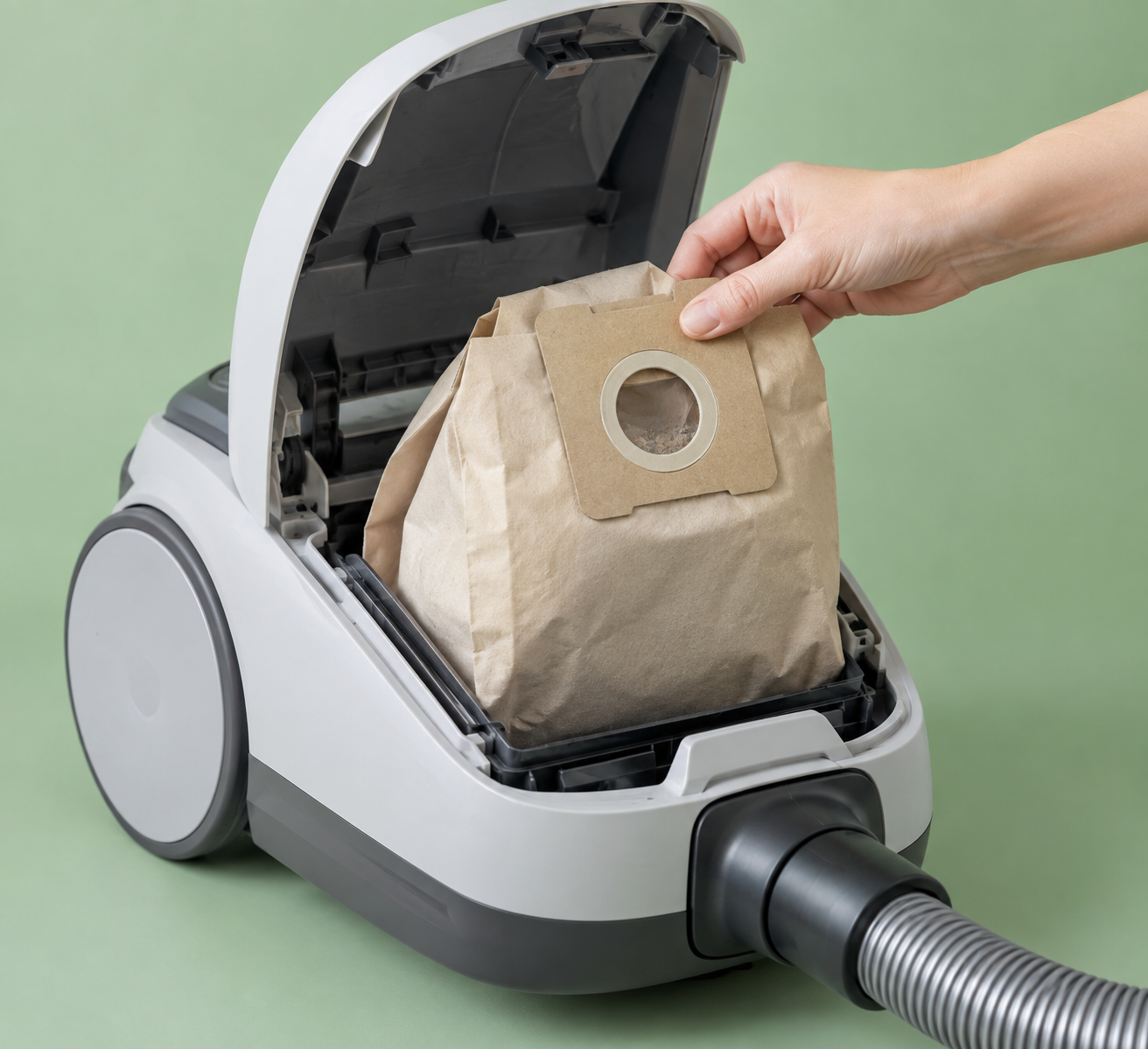
- Lift out the old bag and read the reference printed on its card or plastic collar before you throw it away.
- Check the underside or rear of the machine for a model number, then search that model number using the tool above.
How often to replace it
Most manufacturers recommend replacing a dust bag when it reaches the fill line printed on the bag itself, which for an average household is roughly every four to eight weeks of regular use. A bag left in place past that point restricts airflow, which makes the vacuum work harder and can reduce how well it picks up dust and allergens, even before the bag looks completely full.